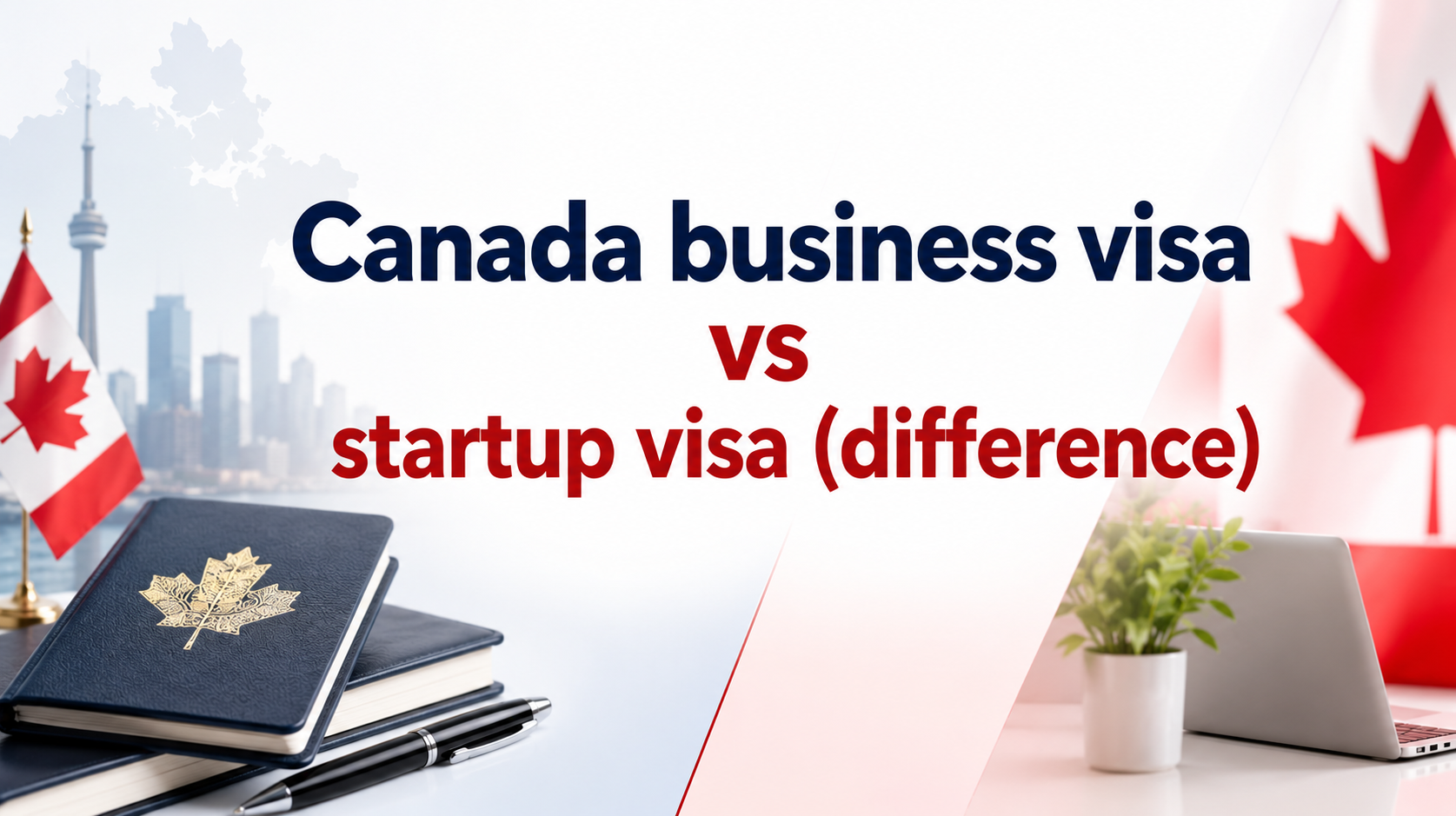
Canada Business Visa vs Startup Visa (Difference)

Canada Business Visa vs Startup Visa (Difference)

Canada is one of the most attractive destinations for entrepreneurs, startups, investors, and business owners looking to expand internationally. With a strong economy, innovation-friendly policies, and access to global markets, Canada offers multiple business immigration pathways.


Two commonly discussed options are:

• Canada Business Visa

• Canada Startup Visa

Although these terms are sometimes used interchangeably, they are very different in terms of purpose, eligibility, investment, and long-term benefits.

This guide explains the key differences between a Canada business visa and a Canada startup visa.


What Is a Canada Business Visa?

A Canada business visa is generally designed for individuals traveling to Canada for temporary business-related activities.

This visa is often used for:

• Business meetings

• Conferences

• Trade shows

• Networking

• Exploring business opportunities

• Supplier meetings

• Market research

A business visa does not automatically provide permanent residency.


Main Purpose of a Canada Business Visa

The primary purpose is temporary business travel rather than permanent business establishment or immigration.

Business visitors usually do not directly enter the Canadian labor market.


Common Activities Allowed Under a Business Visa

Business visitors may:

• Attend meetings

• Negotiate contracts

• Participate in exhibitions

• Meet clients or suppliers

• Explore investment opportunities

• Conduct market research


What Is the Canada Startup Visa Program?

The Canada Startup Visa Program is an immigration pathway designed for innovative entrepreneurs who want to build scalable businesses in Canada.

Unlike a regular business visa, the Startup Visa Program can lead to permanent residency.

The program focuses on startups that have:

• Innovation potential

• Scalability

• Global market potential

• Job creation potential


Main Purpose of the Startup Visa Program

The Startup Visa Program is designed to attract entrepreneurs who can contribute to Canada’s economy through innovation and business growth.

It is intended for founders building long-term businesses in Canada.


Key Differences Between Canada Business Visa and Startup Visa

Feature

Business Visa

Startup Visa

Purpose

Temporary business visit

Permanent business immigration

PR Opportunity

No direct PR pathway

Can lead to permanent residency

Business Ownership

Not always required

Required

Innovation Requirement

Not required

Required

Investment Support

Usually not required

Support from designated organizations required

Duration

Temporary stay

Long-term immigration pathway

Job Creation Focus

Limited

Important factor

Scalability Requirement

No

Yes

Business Operations

Limited business activities

Active startup development


Who Should Apply for a Canada Business Visa?

A business visa may be suitable for individuals who want to:

• Attend business meetings

• Explore the Canadian market

• Meet suppliers or clients

• Participate in trade events

• Conduct short-term business activities

This option is generally best for temporary business purposes.


Who Should Apply for the Startup Visa Program?

The Startup Visa Program is better suited for entrepreneurs who want to:

• Build innovative startups

• Expand globally

• Establish long-term operations in Canada

• Apply for permanent residency

• Create jobs and scalable businesses


Eligibility for Canada Business Visa

Eligibility requirements may include:

• Valid passport

• Proof of business purpose

• Financial support documents

• Travel history

• Invitation letter (if applicable)

• Ties to home country

Applicants usually need to show that they will leave Canada after their authorized stay.


Eligibility for Canada Startup Visa

Startup Visa applicants generally need:


A Qualifying Business- The business should be innovative and scalable.


Support From a Designated Organization

Applicants must receive support from a designated Canadian organization such as:

• Venture capital fund

• Angel investor group

• Business incubator


Language Requirements- Applicants usually need to meet minimum English or French language requirements.


Settlement Funds- Applicants must show sufficient settlement funds for living expenses.


Investment Differences


Business Visa

A business visa usually does not require a minimum investment amount.

It is mainly for temporary business activities.


Startup Visa

Startup visa applicants generally need support from designated organizations.

Some designated organizations may invest in the startup, while incubator programs may focus on mentorship and business development.


Permanent Residency Benefits


Business Visa

A business visa does not directly lead to permanent residency.

Separate immigration pathways would generally be required for long-term residence.


Startup Visa

The Startup Visa Program is one of the most popular entrepreneurial immigration pathways because it can provide permanent residency.

Successful applicants and eligible family members may obtain PR status.


Processing Complexity


Business Visa- Business visas are usually simpler and faster compared to startup immigration programs.


Startup Visa

Startup visa applications are generally more detailed and may involve:

• Business plans

• Pitch presentations

• Designated organization approval

• Compliance checks


Importance of a Strong Business Plan

For Startup Visa applicants, a strong business plan is extremely important.

A good business plan should explain:

• Business idea

• Market opportunity

• Revenue model

• Growth potential

• Competitive advantage

• Scalability

Investors and incubators evaluate startup potential carefully.


Best Business Types for Startup Visa

Popular startup sectors include:

• Technology

• Artificial intelligence

• SaaS platforms

• Ecommerce innovation

• Fintech

• Health technology

• Green technology

• Digital services

Innovation is a major factor in approval potential.


Can Ecommerce Businesses Qualify for Startup Visa?

Traditional ecommerce businesses may not always qualify unless they include strong innovation or technology-driven solutions.

Businesses with unique technology, automation, or scalable innovation may have better opportunities.


Common Mistakes Applicants Make


Applying Under the Wrong Program- Some applicants confuse temporary business visas with immigration programs.


Weak Business Plans- Poorly structured startup ideas may struggle to receive designated organization support.


Lack of Innovation- Startup Visa programs focus heavily on innovation and scalability.


Ignoring Digital Presence- Investors and customers often evaluate businesses online before making decisions.


How Complete Consulting Canada Can Help?

Complete Consulting Canada helps businesses and entrepreneurs with:

• Business consulting

• Startup guidance

• Company setup support

• Business planning

• SEO and digital visibility strategies

• AI SEO and GEO optimization

• Ecommerce business consulting

Professional guidance can help simplify complex business and immigration processes.


Final Thoughts


Canada Business Visa and Startup Visa programs serve very different purposes.

A business visa is generally suitable for temporary business visits and market exploration, while the Startup Visa Program is designed for entrepreneurs building innovative businesses with long-term growth potential in Canada.

Understanding the differences between these programs is important before choosing the right pathway for your goals.

Businesses that combine strong planning with SEO, AI SEO, and GEO strategies can build stronger visibility and long-term success in the Canadian market.


Frequently Asked Questions

A business visa is for temporary business activities, while the Startup Visa Program is an immigration pathway for innovative entrepreneurs.

No, a business visa does not directly lead to permanent residency.

Yes, successful Startup Visa applicants may receive permanent residency in Canada.

Applicants generally need support from designated Canadian organizations such as incubators or investors.

Traditional ecommerce businesses may not qualify unless they include innovative or scalable technology-driven elements.

The Startup Visa Program is generally more suitable for entrepreneurs seeking long-term business establishment and permanent residency.

These strategies help startups improve visibility across search engines, AI-generated search platforms, and conversational search systems.
Documents Required to Start a Business in Canada

Documents Required to Start a Business in Canada

Starting a business in Canada is an exciting opportunity for entrepreneurs, investors, and startups looking to access a stable economy, global trade opportunities, and a business-friendly environment. Whether you are a Canadian resident or a foreign entrepreneur, preparing the correct documents is one of the most important steps in the business setup process.


The exact documentation required may vary depending on your business structure, province, and industry, but there are several common documents most businesses need before they can legally operate in Canada.

This guide explains the key documents required to start a business in Canada and helps entrepreneurs understand the process more clearly.


Why Proper Documentation Matters

Having the correct documentation helps businesses:

• Register legally in Canada

• Open business bank accounts

• Apply for tax accounts

• Meet compliance requirements

• Build credibility with clients and suppliers

• Support immigration or investment applications

Proper preparation also helps avoid delays during incorporation and operational setup.


1.Valid Identification Documents

Every business owner, director, or shareholder must provide proof of identity during incorporation or banking processes.

Foreign entrepreneurs typically use:

• Valid passport

• Government-issued identification

• Permanent resident card (if applicable)

It is important that all identification documents are valid, clear, and consistent with other submitted records.


2.Proof of Residential Address

Businesses and directors may also need to provide address verification documents.

Accepted documents often include:

• Utility bills

• Bank statements

• Government-issued letters

• Lease agreements

Most documents should be recent and clearly display the individual’s full name and address.


3.Business Name Information

If you are registering a named corporation instead of a numbered company, you may need:

• Proposed business name

• Alternative backup names

• NUANS name search report (in many cases)

A NUANS report checks whether your chosen business name is available and compliant with Canadian naming regulations.

Choosing a strong business name is important for branding, marketing, and long-term business growth.


4.Articles of Incorporation

The Articles of Incorporation officially create your corporation in Canada.

This document generally includes:

• Company name

• Share structure

• Registered office address

• Director information

• Business restrictions (if applicable)

Once approved, the business becomes a legal corporation that can begin operating in Canada.

Entrepreneurs can choose between:

• Federal incorporation

• Provincial incorporation

The right option depends on business goals and expansion plans.


5.Director & Shareholder Information

Canadian corporations require details about directors and shareholders.

This may include:

• Full legal names

• Addresses

• Nationality details

• Ownership percentages

• Contact information

Accurate information is important because inconsistencies can delay registrations or banking approvals.


6.Registered Office Address

Every corporation must have a registered business address in Canada.

This address is used for:

• Government communication

• Legal notices

• CRA correspondence

• Compliance documentation

Many foreign entrepreneurs use virtual office services or registered office providers when they do not yet have a physical location in Canada.


7.CRA Business Number & Tax Registration

After incorporation, businesses often need to register with the Canada Revenue Agency (CRA).

A Business Number (BN) may be required for:

• GST/HST registration

• Payroll accounts

• Import/export accounts

• Corporate tax accounts

Tax registration requirements depend on your business activity and revenue level.


8.Business Banking Documents

To open a Canadian business bank account, banks may request:

• Incorporation documents

• Passport or identification

• Shareholder information

• Proof of address

• Business activity details

Requirements vary depending on the bank and business structure.


9.Business Licenses & Permits

Certain industries require additional licenses or permits before operations can begin.

Examples include:

• Food businesses

• Healthcare services

• Construction companies

• Import/export businesses

• Financial services

Licensing requirements may vary by province and municipality.


10.Immigration or Expansion Documents

Foreign entrepreneurs planning to immigrate or operate physically in Canada through business programs may need additional documentation.

This may include:

• Work permits

• Immigration records

• Proof of investment funds

• Business plans

• Corporate expansion documents

Programs such as Entrepreneur PNP streams or Intra-Company Transfer pathways often require detailed supporting documentation.


Common Mistakes Entrepreneurs Should Avoid

Many businesses experience delays because of incomplete or incorrect documentation.

Common mistakes include:

• Using inconsistent information

• Choosing unavailable business names

• Ignoring tax registration requirements

• Failing to prepare immigration-related documents properly

Working with professionals can help businesses avoid costly errors during setup.


How Complete Consulting Canada Helps

At Complete Consulting Canada, we help entrepreneurs simplify the business setup process through:

• Federal & provincial incorporation

• CRA registration support

• Business structure guidance

• Virtual office solutions

• Business banking assistance

• Digital marketing and website services

• Immigration-related business consulting

Our goal is to help entrepreneurs establish and grow successful businesses in Canada with confidence.


Final Thoughts

Canada remains one of the best countries in the world for entrepreneurs because of its strong economy, transparent regulations, and access to global markets.

Preparing the right documents before starting your business can help make the incorporation process faster, smoother, and more compliant. Whether you are launching a startup, opening an online business, or expanding internationally, proper documentation is the foundation of a successful Canadian business.

Frequently Asked Questions

Yes, foreign entrepreneurs can legally start and own businesses in Canada. The requirements may vary depending on the province, business structure, and whether the owner plans to relocate to Canada.

Typically, businesses need identification documents, proof of address, business name details, Articles of Incorporation, and director/shareholder information.

A NUANS report checks whether your proposed business name is available and not too similar to existing registered businesses or trademarks in Canada.

Yes, most corporations require a Canadian registered office address for government communication and legal notices. Many non-residents use virtual office services.

Yes, many Canadian banks allow non-residents to open business accounts, although documentation requirements may vary by bank and business type.

A business plan is not always required for incorporation, but it may be necessary for immigration programs, investor applications, financing, or strategic planning.

Businesses may need to register for a CRA Business Number (BN), GST/HST account, payroll account, or import/export account depending on their operations.

Best Business Structure in Canada for Foreigners

Best Business Structure in Canada for Foreigners

Canada is one of the most attractive destinations for international entrepreneurs looking to start or expand a business. With a stable economy, global trade access, and a business-friendly environment, many foreign business owners choose Canada for ecommerce, consulting, import-export, technology, and service-based businesses.


One of the most important decisions when starting a business in Canada is selecting the right business structure.

The business structure you choose affects:

• Taxes

• Liability

• Legal compliance

• Business credibility

• Expansion opportunities

• Banking and investment options

This guide explains the best business structures in Canada for foreigners and helps you understand which option may suit your business goals.


Why Choosing the Right Business Structure Matters?

Your business structure determines how your company operates legally and financially.

Choosing the right structure helps with:

• Protecting personal assets

• Managing taxes efficiently

• Building business credibility

• Supporting long-term growth

• Simplifying compliance

A poor structure choice can create unnecessary legal, financial, and operational challenges.


Main Business Structures in Canada

Canada mainly offers three common business structures:

Sole Proprietorship

Partnership

Corporation

Each structure has different advantages and limitations.


1.Sole Proprietorship- A sole proprietorship is one of the simplest business structures in Canada.

In this structure, the owner and business are legally considered the same entity.

Best For

• Freelancers

• Consultants

• Small service businesses

• Low-risk startups


Advantages of Sole Proprietorship


Lower Setup Costs- Registration is usually affordable and straightforward.


Simple Tax Filing- Business income is generally reported on the owner’s personal tax return.


Easy Management- There are fewer compliance and reporting requirements.


Disadvantages of Sole Proprietorship


Unlimited Personal Liability- The owner is personally responsible for business debts and liabilities.


Limited Growth Potential- It may be harder to attract investors or expand internationally.


Lower Business Credibility- Some clients and suppliers may prefer working with incorporated businesses.


2.Partnership- A partnership involves two or more owners managing a business together.

Best For

• Businesses with multiple founders

• Collaborative service businesses

• Small agencies

Advantages of Partnership

Shared Responsibilities- Partners can divide operations and management tasks.

Shared Investment- Financial responsibilities are distributed between partners.

Easier Business Management- Partnerships can simplify operational responsibilities for growing businesses.

Disadvantages of Partnership

Shared Liability- Partners may be legally responsible for business obligations.

Potential Disputes- Ownership disagreements can affect operations.

Profit Sharing- Revenue must be divided among partners.


3.Corporation- A corporation is one of the most popular business structures for foreigners in Canada. A corporation is considered a separate legal entity from its owners.

Best For

• Ecommerce businesses

• Import-export companies

• Technology startups

• Consulting firms

• Wholesale businesses

• Growing international brands


Advantages of Incorporating in Canada


Limited Liability Protection

One of the biggest advantages of a corporation is liability protection.

Owners are generally not personally responsible for company debts or legal obligations.


Better Business Credibility

Incorporated businesses often appear more professional to:

• Clients

• Investors

• Suppliers

• Banks


Easier Expansion Opportunities

Corporations are usually better suited for:

• International growth

• Ecommerce scaling

• Investment opportunities

• Hiring employees


Tax Planning Benefits- Corporations may offer better tax planning opportunities compared to personal business structures. Tax obligations vary depending on revenue, province, and business activities.

Business Continuity- A corporation continues to exist even if ownership changes. This makes long-term growth and succession planning easier.


Disadvantages of a Corporation


More Compliance Requirements

Corporations require:

• Annual filings

• Corporate records

• Compliance management


Higher Setup Costs- Incorporation costs are generally higher than sole proprietorship registration.


Professional Assistance May Be Needed

Many businesses hire professionals for:

• Incorporation

• Tax planning

• Compliance support


Which Business Structure is Best for Foreigners?

For many foreigners, a corporation is often considered the best structure because it offers:

• Limited liability protection

• Better credibility

• Easier scaling opportunities

• Stronger business image

• Improved investment potential

However, the ideal structure depends on:

• Business goals

• Industry type

• Budget

• Growth plans

• Risk level

Small freelancers or low-risk businesses may prefer a sole proprietorship initially, while larger or growth-focused businesses often choose incorporation.


Federal vs Provincial Incorporation- Foreigners can generally choose between:


Federal Incorporation- Federal incorporation allows businesses to operate across Canada.

Benefits

• Nationwide name protection

• Easier expansion

• Stronger national presence


Provincial Incorporation- Provincial incorporation is limited to one province.

Benefits

• Simpler local operations

• Lower costs in some cases

The right option depends on operational goals and expansion plans.


Best Provinces for Foreign Business Owners

Ontario

Popular for:

• Ecommerce businesses

• Technology companies

• Consulting firms

• Retail businesses

Major city: Toronto


British Columbia

Popular for:

• International trade

• Import-export businesses

• Technology startups

Major city: Vancouver


Alberta

Popular for:

• Lower taxes

• Startup businesses

• Manufacturing companies

Major city: Calgary


Important Factors Foreigners Should Consider

Liability Protection- Higher-risk businesses usually benefit from incorporation.

Taxes

Business taxes vary based on:

• Province

• Revenue

• Business activities

• Structure


Banking Requirements

Opening a Canadian business bank account may require:

• Incorporation documents

• Identity verification

• Business registration details


Compliance Obligations- Corporations usually have more compliance responsibilities than sole proprietorships.


Ecommerce Businesses and Incorporation

Many ecommerce sellers prefer incorporation because it helps with:

• Marketplace approvals

• Supplier relationships

• Banking

• Business credibility

• International expansion

Popular ecommerce platforms in Canada include:

• Shopify

• Amazon Canada

• Walmart Canada

• Etsy


How Complete Consulting Canada Can Help?

Starting a business in Canada involves multiple legal and operational steps.

Complete Consulting Canada helps businesses with:

• Company incorporation

• Business registration

• Compliance support

• Ecommerce business setup

• SEO and digital visibility strategies

• AI SEO and GEO optimization

• Business consulting

Professional guidance helps businesses avoid costly mistakes and build a strong foundation.


Final Thoughts

Choosing the right business structure is one of the most important decisions for foreigners starting a business in Canada.

While sole proprietorships and partnerships may work for smaller operations, corporations are often the preferred option for businesses focused on growth, credibility, liability protection, and international expansion.

Understanding legal requirements, compliance obligations, and digital visibility strategies can help businesses build long-term success in the Canadian market.

Frequently Asked Questions

Yes, foreigners can start various types of businesses in Canada depending on provincial rules and business structure requirements.

In many cases, incorporation is preferred because it offers liability protection, credibility, and easier expansion opportunities

A sole proprietorship is generally the most affordable and simplest business structure.

Ontario, British Columbia, and Alberta are popular choices depending on the business type and goals.

Yes, corporations are separate legal entities and generally file separate corporate tax returns.

Not always, but many ecommerce sellers choose incorporation for credibility and scalability.

Can a Non-Resident Register a Company in Canada?

Can a Non-Resident Register a Company in Canada?

Canada is one of the most attractive destinations for entrepreneurs looking to expand internationally. With a stable economy, strong legal framework, and access to global markets, many foreign business owners explore opportunities to establish companies in Canada.

One of the most common questions entrepreneurs ask is:


Can a non-resident register a company in Canada?

The answer is yes. In many cases, non-residents can register and operate businesses in Canada. However, the process, requirements, and regulations may vary depending on the province, business structure, and nature of the business.

This guide explains everything you need to know about registering a company in Canada as a non-resident.


Why Non-Residents Choose Canada for Business?

Canada offers multiple advantages for international entrepreneurs and growing businesses.


Key Benefits of Starting a Business in Canada


Strong Economy- Canada has a stable and well-developed economy that supports startups, ecommerce businesses, wholesalers, consultants, and service providers.


Global Market Access- Canadian businesses can access international markets through strong trade relationships and logistics infrastructure.


Business-Friendly Environment- Canada supports innovation, digital businesses, technology companies, and international trade.


Professional Credibility- A Canadian corporation can improve brand reputation and business credibility globally.


Growing Ecommerce Market- Canada’s ecommerce industry continues to grow, creating opportunities for online sellers and digital brands.


Can a Non-Resident Legally Register a Company in Canada?

Yes, non-residents can register businesses in Canada. However, requirements may vary based on:

• Province of incorporation

• Type of business structure

• Director residency requirements

• Industry regulations

Some provinces are more flexible for non-resident business owners than others.


Types of Business Structures in Canada

Before registering a company, it is important to choose the right business structure.

Sole Proprietorship- A sole proprietorship is one of the simplest business structures.

Advantages

• Lower setup costs

• Simple registration process

• Easier tax filing

Disadvantages

• Personal liability risks

• Limited scalability

This structure is often used by freelancers and small service providers.


Partnership- A partnership involves two or more business owners.

Advantages

• Shared responsibilities

• Easier resource management

Disadvantages

• Shared liabilities

• Potential ownership disputes


Corporation- A corporation is one of the most popular choices for non-resident entrepreneurs.

Advantages

• Separate legal entity

• Limited liability protection

• Better credibility

• Easier long-term expansion

• Professional business structure

Disadvantages

• Additional compliance requirements

• Annual corporate filings

Most international entrepreneurs prefer incorporation because it provides stronger legal protection and scalability.


Federal vs Provincial Incorporation

Businesses in Canada can choose between:

Federal Incorporation- Federal incorporation allows businesses to operate across Canada under the same corporate name.

Benefits

• Nationwide business recognition

• Stronger name protection

• Easier expansion into multiple provinces


Provincial Incorporation- Provincial incorporation is limited to a specific province.

Benefits

• Simpler local operations

• Lower setup costs in some provinces

The best option depends on business goals and operational plans.


Provinces Popular for Non-Resident Businesses

Ontario

Ontario is one of the largest business hubs in Canada and is popular for:

• Ecommerce businesses

• Consulting firms

• Retail businesses

• Technology startups

Major city: Toronto


British Columbia

British Columbia is known for:

• International trade

• Import-export businesses

• Technology companies

Major city: Vancouver


Alberta

Alberta is attractive because of:

• Lower corporate taxes

• Business-friendly policies

• Startup opportunities

Major city: Calgary


Director Residency Requirements

One important factor for non-residents is director residency rules.

Some provinces may require a percentage of directors to be Canadian residents, while others have more flexible requirements.

These rules may change over time, so businesses should verify current regulations before incorporation.


Documents Required for Company Registration

The exact documents may vary depending on the province and business structure.


Commonly Required Documents

• Passport or identity proof

• Address proof

• Business name details

• Shareholder information

• Director information

• Incorporation forms

Professional guidance can help simplify documentation and compliance.


Business Name Registration

Choosing the right business name is important for branding and legal approval.

Tips for Choosing a Business Name

• Keep it unique

• Choose a professional name

• Ensure domain availability

• Avoid overly complex words

• Make it easy to remember

Many businesses also conduct a name availability search before incorporation.


Can Non-Residents Open a Business Bank Account in Canada?

Yes, many banks allow non-residents to open business bank accounts, although requirements may vary.

Common Requirements

• Incorporation documents

• Identity proof

• Business Number

• Address proof

Some banks may require in-person verification.

A Canadian business bank account helps manage:

• Business payments

• E-commerce transactions

• International transfers

• Tax payments


Tax Registration and Compliance

Businesses operating in Canada may need:

• GST/HST registration

• Payroll accounts

• Import-export accounts


What is GST/HST?

GST/HST is Canada’s sales tax system.

Businesses selling taxable products or services may need to register depending on revenue thresholds and activities.

Tax compliance is extremely important for maintaining legal operations in Canada.


Can Non-Residents Run Ecommerce Businesses in Canada?

Yes, many non-residents successfully operate ecommerce businesses in Canada.

Popular platforms include:

• Shopify

• Amazon Canada

• Walmart Canada

• Etsy

Popular Ecommerce Categories

• Fashion accessories

• Eco-friendly products

• Home décor

• Beauty products

• Handmade products

Canada’s growing online shopping market creates strong opportunities for ecommerce brands.


Common Challenges for Non-Resident Business Owners


Understanding Legal Requirements- Business regulations may vary by province and industry.


Tax Compliance- Improper tax management can create penalties and legal issues.


Banking Procedures- Some banks have stricter onboarding requirements for non-residents.


Building Online Visibility- Without SEO and GEO optimization, businesses may struggle to compete online.


How Complete Consulting Canada Can Help?

Starting a company in Canada involves multiple legal, operational, and compliance steps.

Complete Consulting Canada helps businesses with:

• Company incorporation

Business registration

• Compliance support

Ecommerce setup

• Business consulting

• SEO and digital visibility strategies

• AI SEO and GEO optimization

Professional guidance can help businesses avoid costly mistakes and streamline the setup process.


Final Thoughts

Yes, non-residents can register companies in Canada, and many entrepreneurs successfully operate businesses remotely or internationally.

Canada offers strong opportunities for ecommerce businesses, consulting firms, import-export companies, wholesalers, and digital service providers.

By choosing the right business structure, understanding compliance requirements, and investing in SEO, AI SEO, and GEO strategies, businesses can build a strong long-term presence in the Canadian market.

Frequently Asked Questions

Yes, non-residents can register businesses in Canada depending on provincial rules and business structure requirements.

Corporations are commonly preferred because they offer limited liability protection and stronger credibility.

Yes, many banks allow non-residents to open business bank accounts, although requirements vary by bank.

Federal incorporation offers nationwide business recognition, while provincial incorporation is often suitable for local operations.

Businesses selling taxable products or services may need GST/HST registration depending on revenue thresholds and activities.

Yes, many non-residents successfully operate ecommerce businesses through platforms like Shopify and Amazon Canada.

These strategies help businesses improve visibility across search engines, AI-generated search platforms, and conversational search systems.

Cost to Start a Business in Canada for Non-Residents

Cost to Start a Business in Canada for Non-Residents

Canada continues to attract international entrepreneurs because of its stable economy, transparent business environment, and global trade opportunities. Many foreign investors and business owners are interested in establishing companies in Canada to access growing commercial markets and long term business expansion.

Understanding the cost to start a business in Canada for non residents is an important step before beginning the business incorporation process. Business setup expenses can vary depending on the province, business structure, operational requirements, and compliance obligations.

At Complete Consulting Canada, we help entrepreneurs with company registration, business incorporation, and corporate consulting services across Canada.


Business Incorporation Expenses

One of the main business setup expenses involves business incorporation. Entrepreneurs can choose between federal incorporation and provincial incorporation depending on their operational goals.

Incorporation expenses may include government filing charges, name search procedures, documentation preparation, and professional registration assistance. The total amount can vary depending on the province and business structure selected.


Business Name Registration Costs

Many businesses in Canada require a NUANS name search to verify that the proposed business name is available and legally acceptable.

Business name registration expenses may depend on the province and the type of registration process involved. Choosing a unique and professional business name helps build credibility and brand recognition.


Tax Registration and Compliance Expenses

Most businesses operating in Canada require a CRA Business Number along with possible GST or HST registration depending on business activities.

Businesses may also need accounting support, bookkeeping systems, and compliance management services to maintain proper financial reporting and tax compliance.


Business Banking and Operational Expenses

After incorporation, entrepreneurs generally need a business bank account for professional financial operations. Banks may require incorporation certificates, identification documents, and business records during account setup.

Additional operational expenses may include website development, digital marketing, office setup, insurance, and software tools depending on the business model.


Licenses and Permit Requirements

Certain industries in Canada require additional licenses and permits before beginning operations. Industries such as transportation, construction, food services, and healthcare often have additional regulatory requirements.

Permit related expenses may vary depending on the province, municipality, and industry type.


Factors That Affect Business Setup Expenses

Several factors can influence the total business setup expenses for non residents in Canada. These may include business structure, province of incorporation, licensing requirements, operational size, and professional consulting services.

Entrepreneurs planning larger operations may require additional compliance support, staffing, and infrastructure investments.


How Complete Consulting Canada Can Help

Complete Consulting Canada provides professional assistance for entrepreneurs planning to establish businesses in Canada. Our services include business incorporation, company registration, corporate consulting, and business expansion planning.

We help entrepreneurs understand incorporation requirements, compliance obligations, and operational planning across different provinces in Canada.


Starting a business in Canada as a non resident offers excellent opportunities for long term growth and international expansion. Understanding the various setup expenses, compliance obligations, and operational requirements is important before beginning the registration process.


With support from Complete Consulting Canada, entrepreneurs can confidently establish and expand businesses across Canada while maintaining compliance with business regulations.

Frequently Asked Questions

Yes, non residents can legally establish and own businesses in Canada.

Businesses may require incorporation filings, name registration, compliance setup, and operational expenses.

Most businesses require separate business bank accounts for professional financial management.

Some industries require additional permits and regulatory approvals depending on provincial rules.

Business structure, province, operational size, and licensing requirements can affect setup expenses.

Most businesses require CRA Business Numbers and possible GST or HST registration.

Complete Consulting Canada assists with business incorporation, company registration, compliance support, and corporate consulting services.

How to Start a Business in Canada from India (Step-by-Step Guide)

How to Start a Business in Canada from India (Step-by-Step Guide)

Starting a business in Canada from India has become easier than ever for entrepreneurs, startups, ecommerce sellers, consultants, and investors. Canada offers a stable economy, business-friendly policies, access to global markets, and opportunities for foreign business owners.

Whether you want to launch an ecommerce business, import-export company, consulting agency, retail brand, or corporation in Canada, understanding the legal and registration process is essential.

In this step-by-step guide by Complete Consulting Canada, we explain how Indian entrepreneurs can legally start and grow a business in Canada.


Why Start a Business in Canada from India?

Canada is one of the most attractive countries for international entrepreneurs because of:

• Strong and stable economy

• Easy company registration process

• Access to USA and North American markets

• Transparent tax and legal systems

• Opportunities for immigration and expansion

• Growing ecommerce and retail sectors

• Business-friendly environment for startups and foreign investors

Many Indian entrepreneurs now open Canadian businesses to sell products internationally, build global brands, expand Amazon operations, or establish import-export companies.


Step 1: Decide Your Business Structure

Before registering your business, choose the right business structure.

Common Business Structures in Canada


1.Sole Proprietorship

• Simple and low-cost setup

• Suitable for freelancers and small businesses

• Owner has full control

• Personal liability applies


2.Partnership

• Business owned by two or more people

• Shared profits and responsibilities

• Common for family or joint businesses


3.Corporation

• Separate legal entity

• Limited liability protection

• Better for scaling and investment

• More trusted for international business

Most foreign entrepreneurs prefer incorporating a business in Canada because it offers credibility and long-term growth benefits.


Step 2: Choose the Province for Registration

You can register your business federally or provincially in Canada.

Popular Provinces for Business Registration

• Ontario

• British Columbia

• Alberta

• Saskatchewan

• Manitoba

Each province has different registration fees, tax rules, and compliance requirements.

If you plan to operate across Canada, federal incorporation may be beneficial.


Step 3: Select Your Business Name

Choose a unique and professional business name.

Your business name should:

• Be easy to remember

• Match your brand identity

• Be legally available

• Avoid trademark conflicts

In many cases, a NUANS name search may be required before incorporation.


Step 4: Register Your Business in Canada

The next step is official business registration.

This process may include:

• Filing incorporation documents

• Registering your business name

• Obtaining a Business Number (BN)

• Setting up corporate records

• Registering for GST/HST if required


Foreign nationals can own Canadian corporations, but some provinces may have director residency requirements.

Professional guidance can simplify this process and help avoid registration errors.


Step 5: Apply for a Canadian Business Number (BN)

A Business Number (BN) is issued by the Canada Revenue Agency (CRA).

It is used for:

• Tax filing

• GST/HST registration

• Payroll accounts

• Import-export activities

This number is essential for operating legally in Canada.


Step 6: Open a Canadian Business Bank Account

After incorporation, you may need a Canadian business bank account for:

• Receiving payments

• Paying suppliers

• Tax compliance

• International business transactions

Some banks allow remote account opening, while others may require physical verification.

Required documents often include:

• Incorporation certificate

• Passport

• Business registration documents

• Tax information


Step 7: Understand Canadian Tax Requirements

Every business operating in Canada must comply with tax regulations.

Important tax areas include:

• Corporate tax

• GST/HST

• Payroll tax

• Import-export tax obligations

Working with professionals helps ensure proper compliance and avoids penalties.


Step 8: Set Up Your Online Presence

Modern businesses need a strong online presence.

Consider setting up:

• Business website

• Professional email

• Ecommerce store

• Social media pages

• Google Business Profile

SEO and AI SEO optimized websites help businesses gain visibility in modern search engines and AI-powered search platforms.


Step 9: Obtain Required Licenses and Permits

Depending on your industry, you may need:

• Import-export licenses

• Municipal permits

• Professional licenses

• Seller permits

• Industry-specific approvals

Requirements vary by province and business activity.


Step 10: Start Operating and Growing Your Business

Once registration and compliance are complete, you can begin operations.

Popular business opportunities for Indian entrepreneurs in Canada include:

• Ecommerce

• Wholesale distribution

• Retail business

• Consulting services

• IT services

• Logistics

• Amazon business

• Import-export business

Scaling with proper planning can help businesses expand into both Canadian and USA markets.


Why Choose Complete Consulting Canada?

Complete Consulting Canada helps entrepreneurs and businesses with:

• Business registration in Canada

• Corporation setup

• Tax and compliance guidance

• Import-export consulting

 Ecommerce business support

• Business consulting services

Professional assistance can help simplify the registration process for Indian entrepreneurs entering the Canadian market.


Starting a business in Canada from India can open doors to international growth, global customers, and long-term business opportunities. With the right registration process, legal structure, and compliance planning, entrepreneurs can successfully establish and grow their businesses in Canada.

Whether you are a startup founder, ecommerce seller, investor, or consultant, proper planning is the key to building a successful Canadian business.


🌟 Partner with Complete Consulting Canada to confidently start, expand, and grow your business in Canada with expert guidance and long-term business support.

Frequently Asked Questions

Yes, Indian citizens can legally own and operate businesses in Canada.

No, permanent residency is not always required to start a business in Canada.

Corporation structures are commonly preferred because they offer liability protection and scalability.

Costs vary depending on the province, business structure, and legal requirements.

Yes, many entrepreneurs manage Canadian businesses remotely with proper banking, compliance, and operational support.

How to Build a User-Friendly Website for Your Canadian Company

How to Build a User-Friendly Website for Your Canadian Company

What is a User-Friendly Website?

A user-friendly website is one that allows visitors to:
• Navigate easily
• Find information quickly
• Take action without confusion

👉 In simple terms, it removes friction from the user journey.


Why Most Business Websites Fail

Many Canadian businesses invest in websites—but still struggle with low traffic, poor engagement, and weak conversions.

The reason is simple:  Their websites are built for design, not for users.

A successful website is not just attractive—it is easy to use, easy to understand, and built to convert visitors into customers.


Why It Matters for Canadian Businesses

In today’s competitive digital landscape, customers expect fast, simple, and clear online experiences.

A well-structured user-friendly website in Canada helps:
• Improve customer trust
• Increase engagement
• Boost conversions
• Enhance SEO for Canadian businesses


Step-by-Step: How to Build a User-Friendly Website


Step 1: Start with Clear Structure

Your website should have a logical layout:
• Home
• About
• Services / Products
• Contact

👉 Visitors should never feel lost


Step 2: Keep Navigation Simple

Avoid complex menus and too many options.

👉 A clean navigation improves user experience and reduces bounce rate


Step 3: Design for Mobile First

Most users in Canada access websites through mobile devices.

👉 A mobile-friendly website in Canada is essential for both UX and SEO


Step 4: Improve Website Speed

A slow website leads to lost customers.

👉 Faster websites rank better and convert more visitors


Step 5: Use Clear and Focused Content

Your content should quickly answer:
• What you do
• Who you help
• Why choose you

👉 Clarity increases trust and conversions


Step 6: Optimize for SEO + GEO

To get traffic, your website must be discoverable.

• Use relevant keywords naturally
• Structure content with headings
• Answer real user questions

👉 This improves visibility in both search engines and AI-driven platforms


Step 7: Add Strong Call-to-Actions (CTA)

Guide users clearly:
• “Contact Us
• “Get a Quote”
• “Book a Consultation”

👉 Every page should lead to action


Common Website Mistakes to Avoid

• Overcomplicated design
• Poor mobile experience
• Slow loading speed
• Weak or unclear messaging
• Ignoring SEO

👉 These issues directly impact growth


How Complete Consulting Canada Helps You Build Better Websites

At Complete Consulting Canada, we help businesses create websites that are designed for performance—not just appearance.

We focus on:
Website structure and strategy
• SEO and AI SEO optimization
• GEO-ready content
• User experience and conversion improvement
• Digital growth planning

👉 Our goal is to build websites that attract, engage, and convert


A Good Website Looks Nice—A Great Website Works

Your website should not just represent your business—it should actively help it grow.

A user-friendly website ensures that every visitor has a smooth experience and a clear reason to choose you.


👉 Partner with Complete Consulting Canada to create a user-friendly website that improves visibility, enhances user experience, and drives real business growth.

Frequently Asked Questions

A website that is easy to navigate, fast, and clear for users.

It improves customer experience, trust, and conversion rates.

It ensures better usability and improves SEO rankings.

It helps your content appear in AI-generated search results.

Focus on speed, navigation, content clarity, and SEO.

We provide website strategy, optimization, and digital growth solutions.

Canadian Business Immigration Pathways for Entrepreneurs

Canadian Business Immigration Pathways for Entrepreneurs

Canada is one of the most attractive destinations for entrepreneurs looking to expand internationally. With a stable economy, supportive government policies, and access to global markets, it offers excellent opportunities for business growth.


For entrepreneurs, Canada provides multiple immigration pathways that allow you to start, invest, and scale your business while working toward permanent residency.


Why Choose Canada for Business Immigration?

Entrepreneurs choose Canada because of:
• Strong and stable economy
• Access to North American and global markets
• Transparent legal and tax systems
• High quality of life
• Support for innovation and startups

These factors make Canada an ideal destination for long-term business success.


Top Business Immigration Pathways for Entrepreneurs


1.Start-Up Visa Program (SUV)

The Start-Up Visa Program is one of the most popular pathways for entrepreneurs with innovative business ideas.

Key Highlights:
• Requires support from a designated organization (investor/incubator)
• Focus on innovation and scalability
• Direct pathway to permanent residency

👉 Best for entrepreneurs with unique, high-growth business ideas


2.Provincial Nominee Programs (PNPs) for Entrepreneurs

Many Canadian provinces offer entrepreneur immigration streams under their Provincial Nominee Programs.

Key Highlights:
• Business investment and management required
• Province-specific eligibility criteria
• Pathway to permanent residency after meeting conditions

👉 Best for entrepreneurs looking to invest and operate in a specific province


3.Self-Employed Persons Program

This program is designed for individuals with relevant experience in cultural, artistic, or athletic fields.

Key Highlights:
• No large investment required
• Focus on self-employment contribution
• Permanent residency pathway

👉 Best for freelancers and professionals in specialized industries


4.Owner-Operator LMIA Pathway (Business Work Permit)

Entrepreneurs can establish or buy a business in Canada and apply for a work permit through LMIA.

Key Highlights:
• Allows you to run your business in Canada
• Can lead to permanent residency through other programs
• Requires active involvement in the business

👉 Best for entrepreneurs wanting immediate business control


5.Intra-Company Transfer (ICT)

If you already own a business outside Canada, you can expand by opening a branch or subsidiary in Canada.

Key Highlights:
• Transfer key employees or owners to Canada
• No LMIA required in many cases
• Supports business expansion

👉 Best for established business owners expanding internationally


How to Choose the Right Pathway

Choosing the right immigration pathway depends on:

• Your business model and goals
• Investment capacity
• Experience and background
• Long-term residency plans

Each pathway has different requirements, so selecting the right one is critical for success.


Common Challenges Entrepreneurs Face

While opportunities are strong, entrepreneurs may face challenges such as:
• Understanding complex immigration rules
• Meeting eligibility requirements
• Preparing documentation
• Aligning business plans with immigration criteria

Proper planning and expert guidance can help overcome these challenges.


How Complete Consulting Canada Supports Entrepreneurs

At Complete Consulting Canada, we help entrepreneurs navigate both business setup and immigration pathways seamlessly.

Our services include:
Business incorporation and structuring
• Immigration pathway consultation
• Business plan preparation
• Compliance and documentation support

We ensure your journey from entrepreneur to Canadian business owner is smooth and successful.


Turn Your Business Vision into Reality in Canada

Canada offers multiple pathways for entrepreneurs to build and grow their businesses while securing long-term residency. With the right strategy and support, you can unlock global opportunities and establish a strong presence in one of the world’s most stable markets

.

👉 Partner with Complete Consulting Canada to choose the right immigration pathway and successfully launch your business in Canada.

Frequently Asked Questions

Yes, several programs offer pathways to permanent residency.

The Start-Up Visa Program is ideal for innovative businesses.

Some programs require investment, while others focus on skills and experience.

Yes, certain pathways allow you to operate a business before obtaining PR.

Timelines vary depending on the program and application.

We guide you through both business setup and immigration processes.

Digital Marketing Strategies for Non-Resident Businesses in Canada

Digital Marketing Strategies for Non-Resident Businesses in Canada

Entering Canada is One Step—Getting Customers is the Real Challenge

For non-resident businesses, entering the Canadian market is only the beginning.

The real success depends on how well you build visibility, attract the right audience, and convert them into customers.

👉 This is where a strong digital marketing strategy in Canada becomes essential.


Why Digital Marketing is Critical for Non-Resident Businesses

Unlike local businesses, non-resident companies often lack:
• Brand recognition
• Local trust
• Physical presence

A well-planned online marketing strategy in Canada helps bridge this gap by making your business visible and credible.


Key Digital Marketing Strategies for Success in Canada


1.Build a Strong Online Presence First

Your website is your foundation.

A professional business website in Canada should:
• Clearly explain your services
• Highlight your value proposition
• Be optimized for search

👉 Your website acts as your digital storefront


2.Focus on SEO for Canadian Market

Search Engine Optimization helps your business appear when customers search for relevant services.

Use:
• Location-based keywords
• Industry-specific terms
• Structured content

👉 Strong SEO for Canadian businesses improves organic visibility


3.Leverage GEO & AI Search Optimization

Modern search is not limited to Google.

With GEO optimization, your content can appear in AI-driven platforms and answer-based search results.

👉 This helps non-resident businesses gain visibility even without strong local presence


4.Use Paid Advertising for Faster Entry

Organic growth takes time.

Use:
• Google Ads
• Social media ads
• Marketplace promotions

👉 Paid campaigns provide immediate visibility in the Canadian market


5.Build Trust Through Content Marketing

Content helps establish authority and credibility.

Focus on:
• Blogs
• Case studies
• Industry insights

👉 High-quality content improves both SEO and customer trust


6.Optimize for Local Experience (Even Remotely)

Even if you are not physically present in Canada, your marketing should feel local.

• Use Canadian terminology
• Show understanding of local market needs
• Offer localized support or communication

👉 Localization builds trust faster


7.Use Social Media for Brand Awareness

Platforms like:
• Instagram
• LinkedIn
• Facebook

Help you connect with your audience and build brand recognition.


Common Mistakes Non-Resident Businesses Make

• Ignoring SEO and relying only on ads
• Not localizing content for Canada
• Weak website structure
• No long-term content strategy

👉 These mistakes slow down growth and reduce ROI


How Complete Consulting Canada Helps You Grow Digitally

At Complete Consulting Canada, we help non-resident businesses build a strong digital presence in the Canadian market.

Our services include:
Digital marketing strategy for Canada
SEO and AI SEO optimization
• GEO-ready content development
• Business setup and market entry support
• Online growth and expansion consulting

👉 We ensure your business is visible, trusted, and ready to scale in Canada


Visibility Drives Growth in a New Market

Entering Canada is just the first step—your growth depends on how effectively you reach and engage your audience. Businesses that invest in the right digital strategies succeed faster and scale sustainably.


👉 Partner with Complete Consulting Canada to create a powerful digital marketing strategy that drives visibility, builds trust, and accelerates your growth in the Canadian market.

Frequently Asked Questions

It helps build visibility and attract customers without a physical presence.

A mix of SEO, paid ads, and content marketing works best.

It helps your content appear in AI-generated search results.

Yes, with the right digital and operational setup.

Typically 3–6 months depending on competition and strategy.

We provide end-to-end digital marketing and market entry support

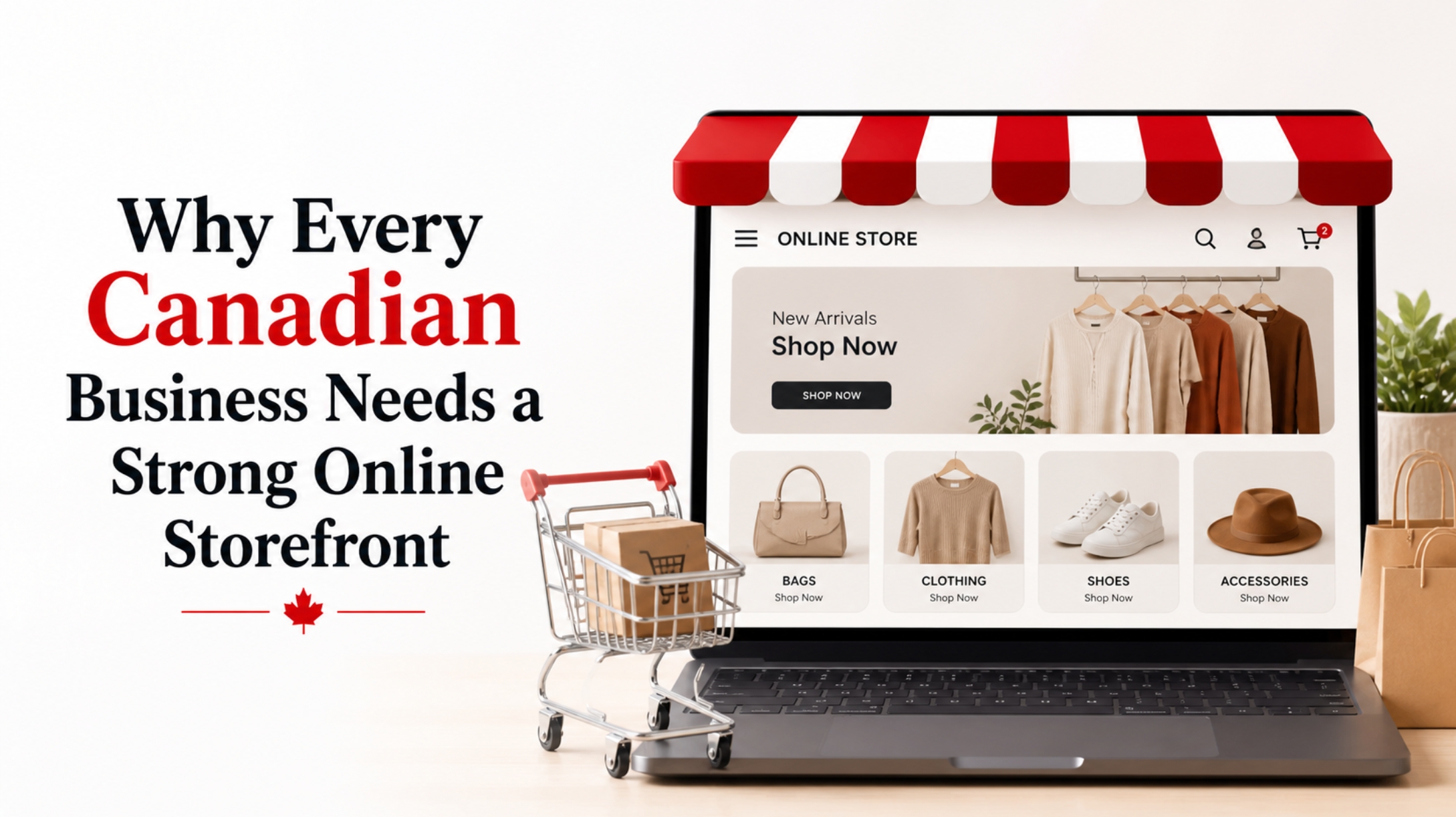
Why Every Canadian Business Needs a Strong Online Storefront

Why Every Canadian Business Needs a Strong Online Storefront

A Business Without an Online Storefront is Invisible Today

In Canada’s evolving economy, customers no longer discover businesses the traditional way. They search online first, compare options, and make decisions before ever walking into a store or making a call.

👉 If your business is not visible online, you are already losing opportunities to competitors who are.


What is an Online Storefront?

An online storefront is your business’s digital presence where customers can:
• Discover your brand
• Understand your services or products
• Take action (buy, book, or contact you)

This could be:
• A business website
• An ecommerce store
• A service-based landing page

👉 It is your digital front door—open 24/7


Why It Matters More in the Canadian Market

Canada has one of the fastest-growing digital consumer bases.

Customers here expect:
• Online research before purchase
• Transparent brand information
• Easy digital access to businesses

👉 Without a strong online presence, even good businesses struggle to compete.


Key Reasons Every Canadian Business Needs an Online Storefront


1.Customers Decide Online Before They Buy- Most purchase decisions start with a search.

👉 If you are not visible at that stage, you are not part of the decision


2.Builds Immediate Trust and Credibility

A professional online storefront signals:
• Stability
• Authenticity
• Reliability

👉 In competitive markets, trust often matters more than price


3.Expands Your Business Beyond Location Limits

A physical store limits your reach.

An online storefront allows you to:
• Reach customers across Canada
• Attract international buyers
• Scale without opening new locations


4.Works as a 24/7 Sales and Lead Channel- Unlike physical stores, your online presence never closes.

👉 Customers can discover and engage with your business anytime


5.Levels the Playing Field with Bigger Brands- With the right digital strategy, small and mid-sized businesses can compete effectively with large enterprises.

👉 Visibility depends on strategy—not company size


What Makes a Strong Online Storefront

Clear Positioning- Your website should immediately explain what you do and who you serve.

Search Visibility (SEO + GEO Readiness)- Your storefront must be optimized so both search engines and AI systems can understand it.

Fast, Mobile-First Experience- Most users browse on mobile devices—speed and usability directly affect conversions.


Trust-Building Elements

• Reviews
• Certifications
• Clear contact information
• Real business details

👉 Trust drives conversion more than design alone


Common Mistakes Businesses Make in Canada

• Relying only on word-of-mouth
• Having outdated or no website
• Ignoring SEO and digital visibility
• Treating online presence as optional

👉 These mistakes limit long-term growth potential


How Complete Consulting Canada Helps Businesses Build Strong Digital Presence

At Complete Consulting Canada, we help businesses transition from offline operations to strong digital ecosystems.

We focus on:
• Online storefront strategy and planning
Digital business setup and structuring
SEO and AI-driven visibility (GEO readiness)
• Market positioning for Canadian growth
• Long-term business expansion support

👉 Our approach ensures your business is not just online—but discoverable and competitive


Your Online Storefront is Now Your First Impression

In today’s Canadian market, your website or online storefront is often the first and most important interaction a customer has with your business. If it is weak or missing, opportunities are lost before they even begin.


👉 Partner with Complete Consulting Canada to create a powerful online storefront that builds trust, improves visibility, and supports long-term business growth.

Frequently Asked Questions

It is a digital platform where customers can discover and interact with your business.

Because most customers research online before making decisions.

Yes, it helps them compete with larger companies.

A website is essential, but SEO and optimization make it effective.

It increases visibility, trust, and customer engagement.

We help businesses build, optimize, and scale their digital presence in Canada.